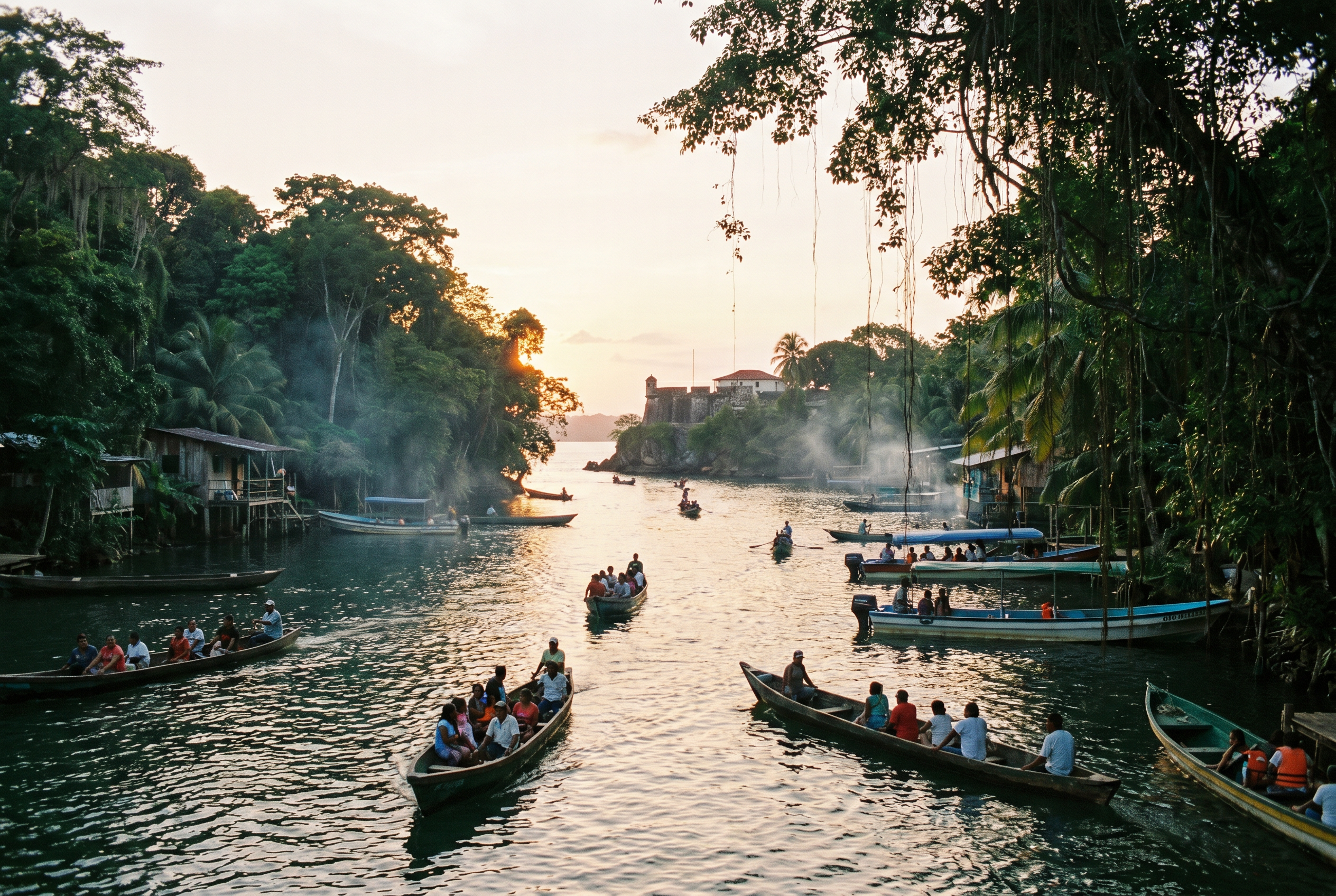
Río Dulce is one of Guatemala's most scenic waterways — a tropical river that flows from Lake Izabal through a dramatic jungle canyon before reaching the Caribbean coast at Livingston. The river journey passes hot springs, bird-filled mangroves, and the sixteenth-century Castillo de San Felipe, offering a travel experience that combines natural beauty, history, and the transition from highland to Caribbean culture.
The journey from the town of Río Dulce to Livingston by boat takes approximately two hours and passes through three distinct environments. The first section passes beneath the bridge that carries the Atlantic Highway and enters the canyon — steep jungle walls rising 30 meters on either side, the river narrowing to a corridor of green and blue. Hot springs emerge from the canyon walls in places, creating warm patches in the river that can be felt from the boat.
The canyon opens into a wide lagoon called El Golfete, a shallow body of water surrounded by mangroves that is home to an extraordinary variety of birds. Herons, kingfishers, cormorants, and, if you are fortunate, manatees inhabit this section of the river. The Chocón Machacas Biotopo, a protected area within El Golfete, was established specifically to protect the West Indian manatee population and the mangrove ecosystem that supports it.
The Castillo de San Felipe, built by the Spanish in 1595 at the point where the river meets Lake Izabal, is one of the best-preserved colonial fortifications in Central America. The castle was built to protect the lake and the interior trade routes from pirate raids — the Caribbean coast of Central America was a regular target for English and Dutch pirates throughout the seventeenth century. Today the castle is a museum and park, and the views from its battlements over the lake and the river entrance are excellent.
The river corridor has long been inhabited by Q'eqchi' Maya and Garifuna communities, and the journey along the water offers encounters with both cultural traditions in their natural setting. Small Q'eqchi' villages line the riverbanks, accessible only by boat, and the Garifuna community of Livingston at the river's mouth represents one of the most distinctive cultural traditions in Central America.
Heritage & Cultural Context
The Deeper Story
The Río Dulce corridor was one of the most strategically important waterways in colonial Central America. Lake Izabal served as a transshipment point for goods moving between the Caribbean coast and the highland interior, and the river was the only navigable route connecting them. The Castillo de San Felipe was the physical expression of the Spanish effort to control this corridor — and the pirates who repeatedly attacked and sometimes captured it were the expression of the broader struggle for control of Caribbean trade routes that defined the colonial era.
A Note from The Quetzal Collective
The Río Dulce corridor represents the meeting point of two of Guatemala's most distinct cultural traditions — the Q'eqchi' Maya of the highlands and the Garifuna of the Caribbean coast. The Quetzal Collective's engagement with Guatemalan culture extends beyond the highland Maya weaving traditions to include the full range of the country's cultural diversity.