The Quetzal Collective — Heritage Series
Woven With Meaning:
The Language of Maya Textiles
Every thread carries a story. Every color holds a meaning. Every pattern speaks a language older than any written word.
A Legacy Woven Over 1,500 Years
A textile is not just fabric. It is a document.
Guatemalan textiles are more than fabric — they are woven history, art, and identity. This tradition began over 1,500 years ago with the ancient Maya civilization, who believed that weaving was a sacred skill taught by Ix Chel, the moon goddess and cosmic weaver. Passed down through generations, weaving became an integral part of Maya culture. Each baby girl was once blessed with miniature weaving tools in a special ceremony, symbolizing her future role in preserving this ancient art.
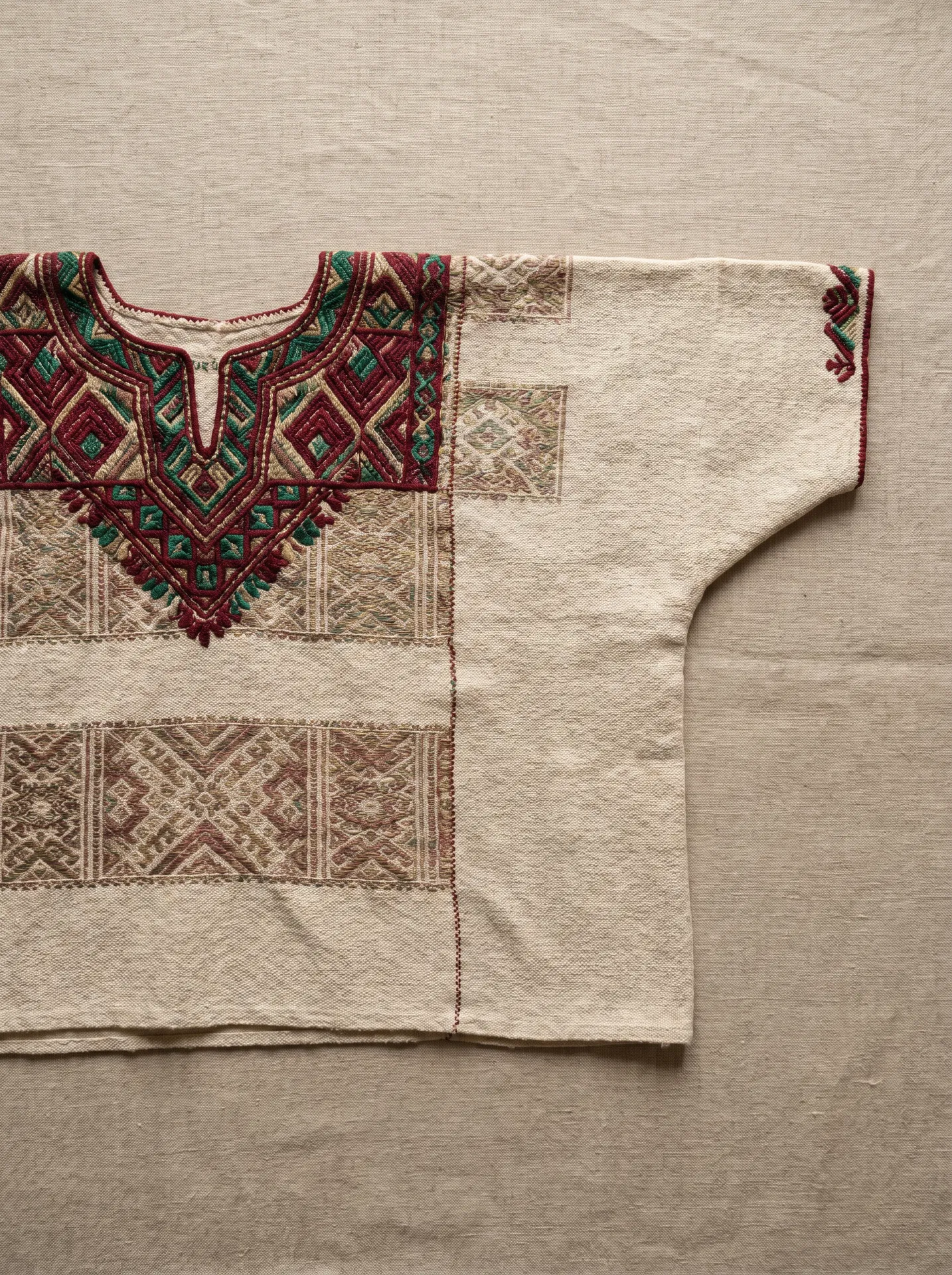
In Maya communities across Guatemala, handwoven textiles have always been more than clothing. They are visual records of place, identity, community, and belief. A woman's huipil can tell you where she is from, what community she belongs to, what occasion she is dressing for, and sometimes even her family lineage — all without a single written word.
This is not ancient history. Maya women are weaving today, right now, using techniques passed down through generations. The backstrap loom has not changed in centuries. The motifs evolve slowly, carefully, with intention. When you hold a piece of Guatemalan Maya textile, you are holding something that connects directly to a living tradition.
At The Quetzal Collective, we believe that understanding this language is part of honoring it. This guide is our attempt to share what we have learned — with humility, with care, and with deep respect for the communities whose knowledge it represents.
The Art of Weaving
The Backstrap Loom
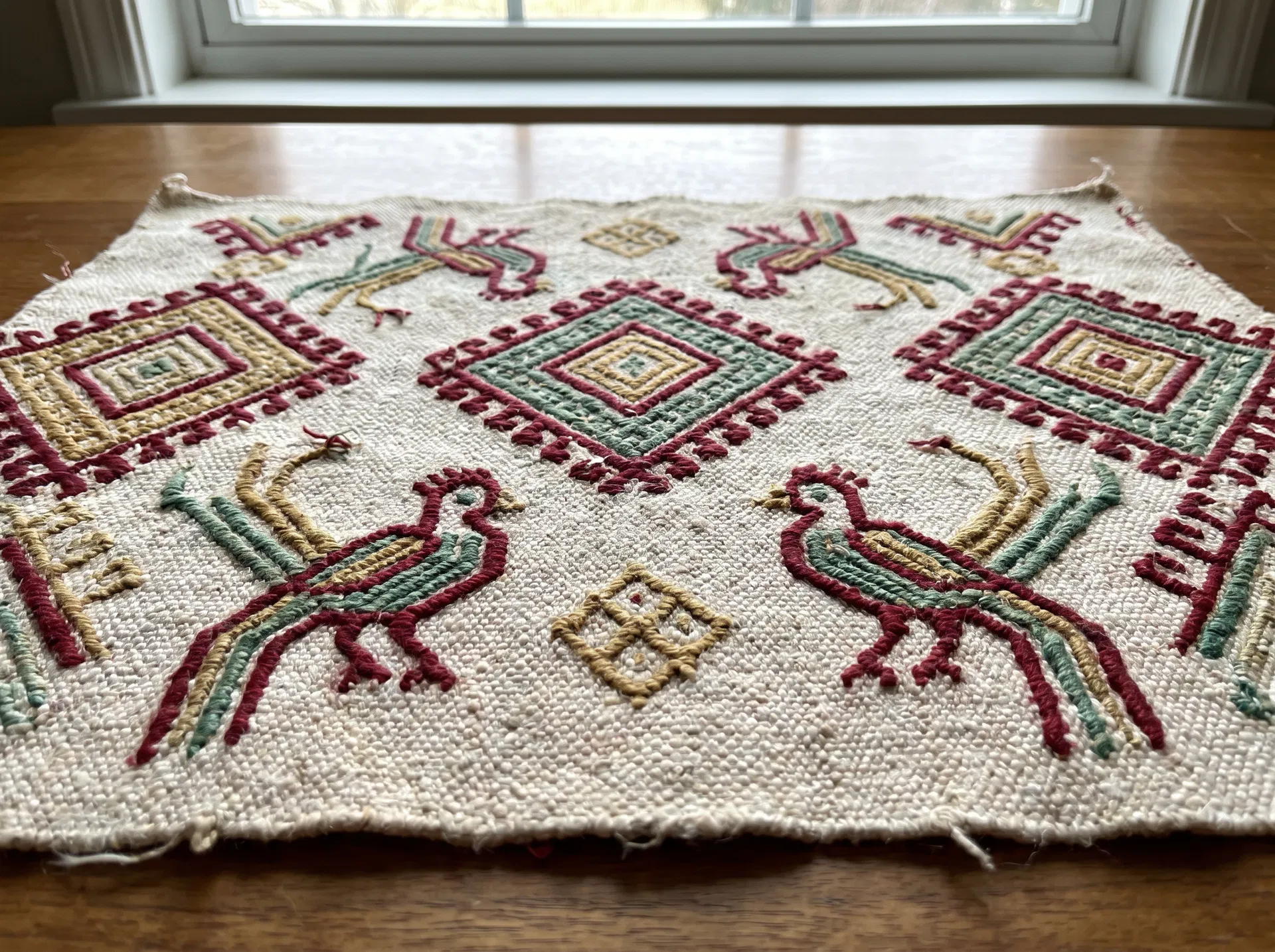
Weaving in Guatemala is primarily done using the traditional backstrap loom, an ancient technique passed down through generations. This loom is simple in form: wooden rods and a leather strap that wraps around the weaver's back. The tension required for weaving is maintained by the weaver's own body position, making it both a skillful and deeply personal craft.
The weaving process begins with yarn preparation, where cotton is spun into balls. The design is then planned using a warping frame, and finally the fabric is created by weaving the weft threads through the warp threads with a shuttle. The weaver and the loom move together as one.
Color & Natural Dyes
Color from the Land
Historically, cotton was the primary material used, with natural dyes derived from local plants and minerals. Colors were created using ingredients like hibiscus flowers for pink, carrots for orange, quilete herbs for green, and avocado tree bark for beige.
While synthetic dyes are more common today, many artisans still honor tradition by using natural dyes — especially for ceremonial pieces. The colors of a textile are not only aesthetic choices. They connect the cloth to the land, the season, and the community that made it.
A Note on Terminology
The terms in this guide come from Spanish transliterations of K'iche', Kaqchikel, Tz'utujil, and other Maya languages. Pronunciation, spelling, and meaning can vary by community and region.
We use these terms as reference points, not as fixed definitions. Meaning can shift by community, garment type, and artisan — and that is part of what makes each piece so alive.
A Deeper Guide to Maya Textile Symbols
Shapes That Speak
Maya textiles are often admired for their color and beauty, but their deeper meaning lives in the details: diamonds, birds, crosses, borders, zigzags, flowers, stars, serpents, and repeated lines. These forms can carry references to the four directions, the sun, the land, the ceiba tree, family, ceremony, agriculture, protection, and the movement between worlds.
Still, these symbols should never be treated as a simple code where one shape always means one thing. A diamond may carry cosmic meaning in one context, agricultural meaning in another, and personal or community meaning somewhere else. This guide is meant to offer a deeper way of looking — honoring Maya textile symbolism as a living visual language, shaped by region, community, history, ceremony, and the hands of the weaver herself.
A Note on Meaning
Maya textile symbolism is deeply regional, community-specific, and sometimes personal to the weaver. The meanings shared here are general interpretations gathered from textile research, museum collections, artisan sources, and cultural education materials. They should not be treated as the only meaning of a symbol. Many designs hold meanings known most fully by the weavers, families, and communities who carry these traditions forward.
Diamond / Rhombus — TQC Collection
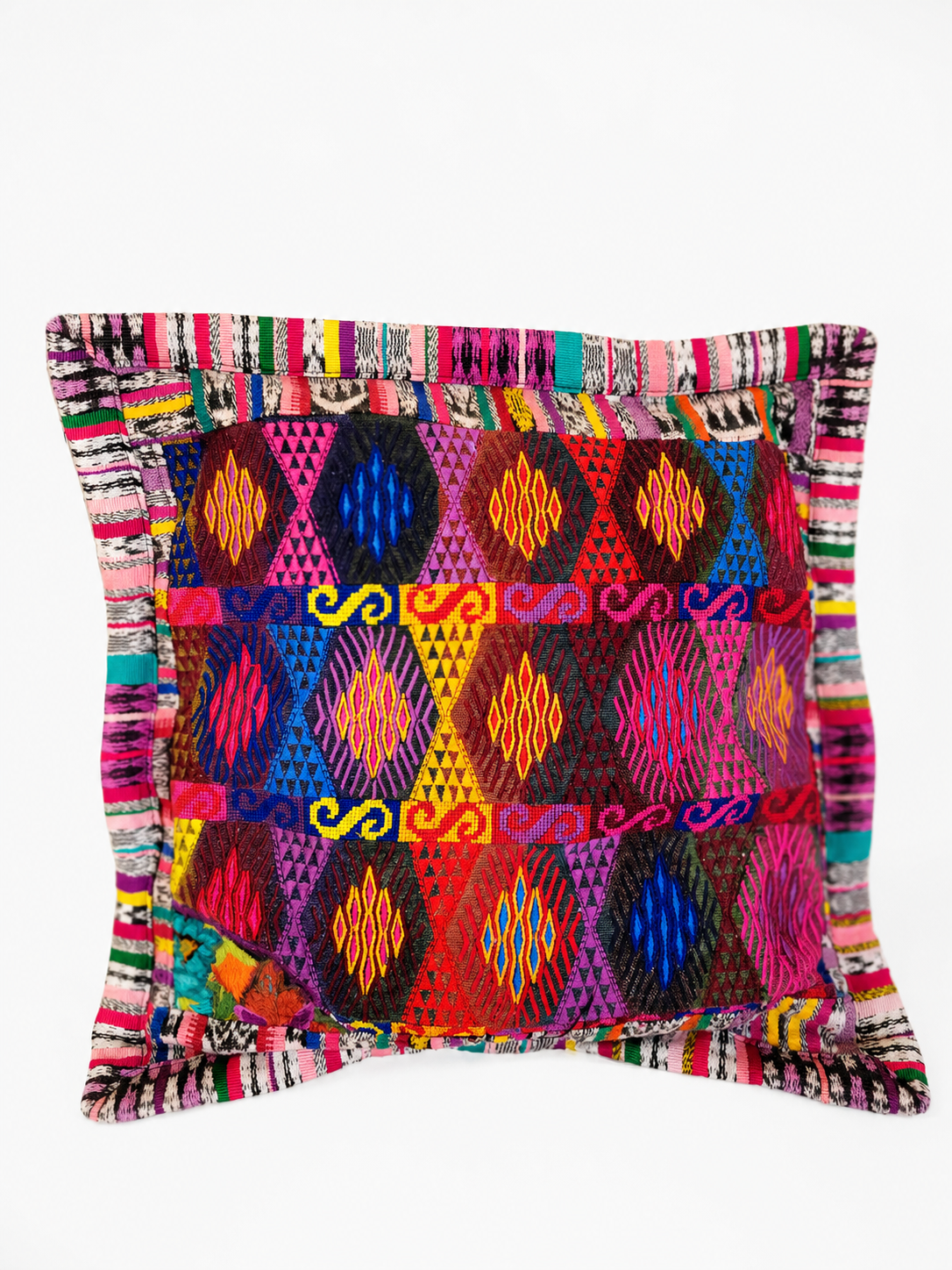
The diamond is one of the most layered forms in Maya textiles. In some traditions, it is connected to the four corners of the universe, the four directions, and the movement of the sun. In other contexts, it may suggest a town square, a ceremonial plate, a portal, or cultivated farmland. Some weavers and textile educators also describe the diamond as the body and movement of the weaver herself — the lower point as her body, the upper point as the textile or creation, and the sides as the movement of her arms while weaving. Because of this, the diamond should not be reduced to one simple meaning. It can represent order, creation, place, movement, and life at the same time.
Cross / Four Directions — TQC Collection
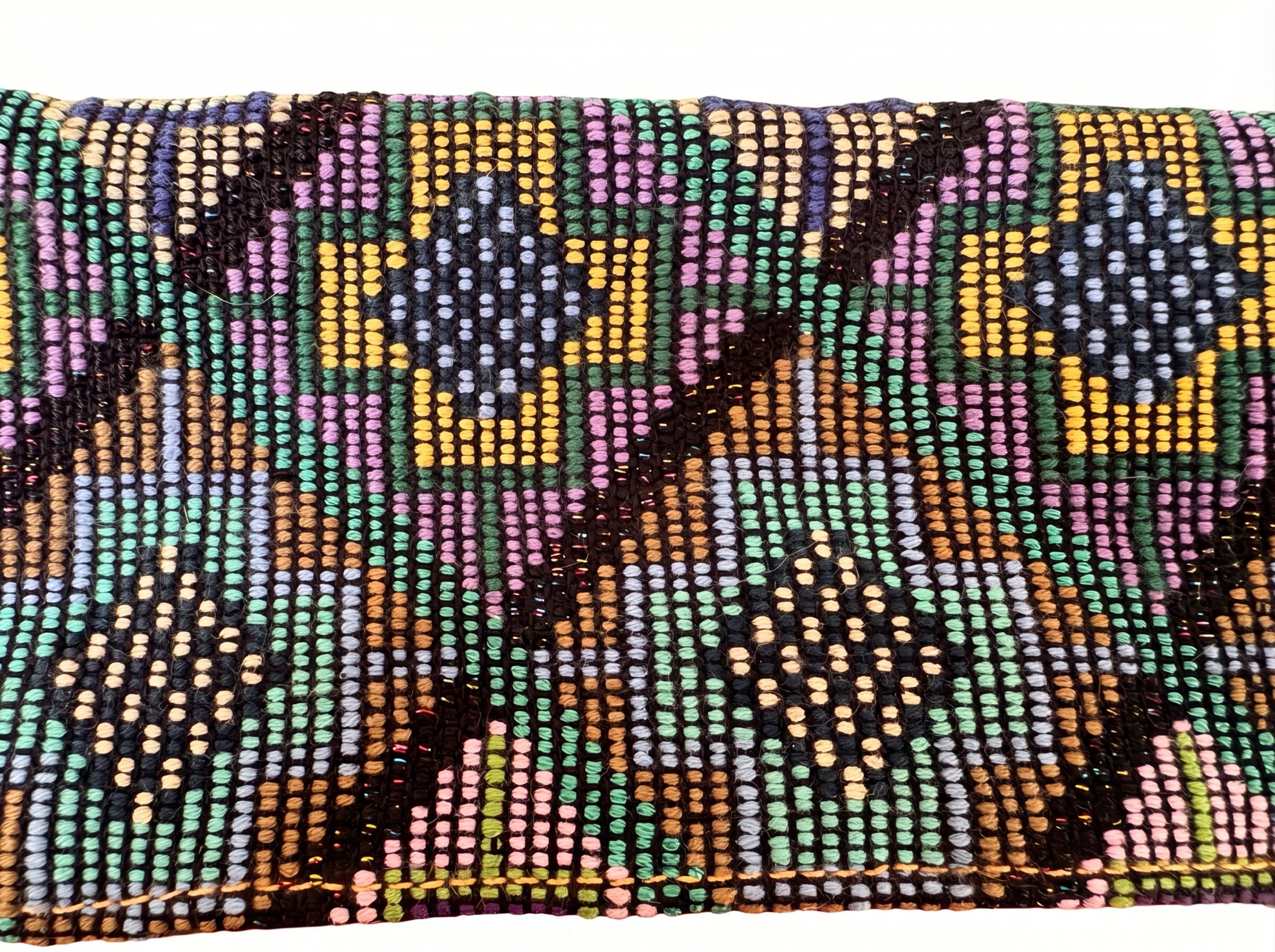
Cross-like forms in Maya textiles may represent the four directions, the center of the world, and the relationship between earth, sky, and the spiritual realm. In some contexts, the cross can also reflect Catholic influence introduced through colonization. These meanings do not always cancel each other out. In many communities, symbols carry layered histories — where Indigenous cosmology and later religious influence exist together in the same visual form. A cross may carry Catholic meaning in one context, Maya cosmological meaning in another, or both at the same time.
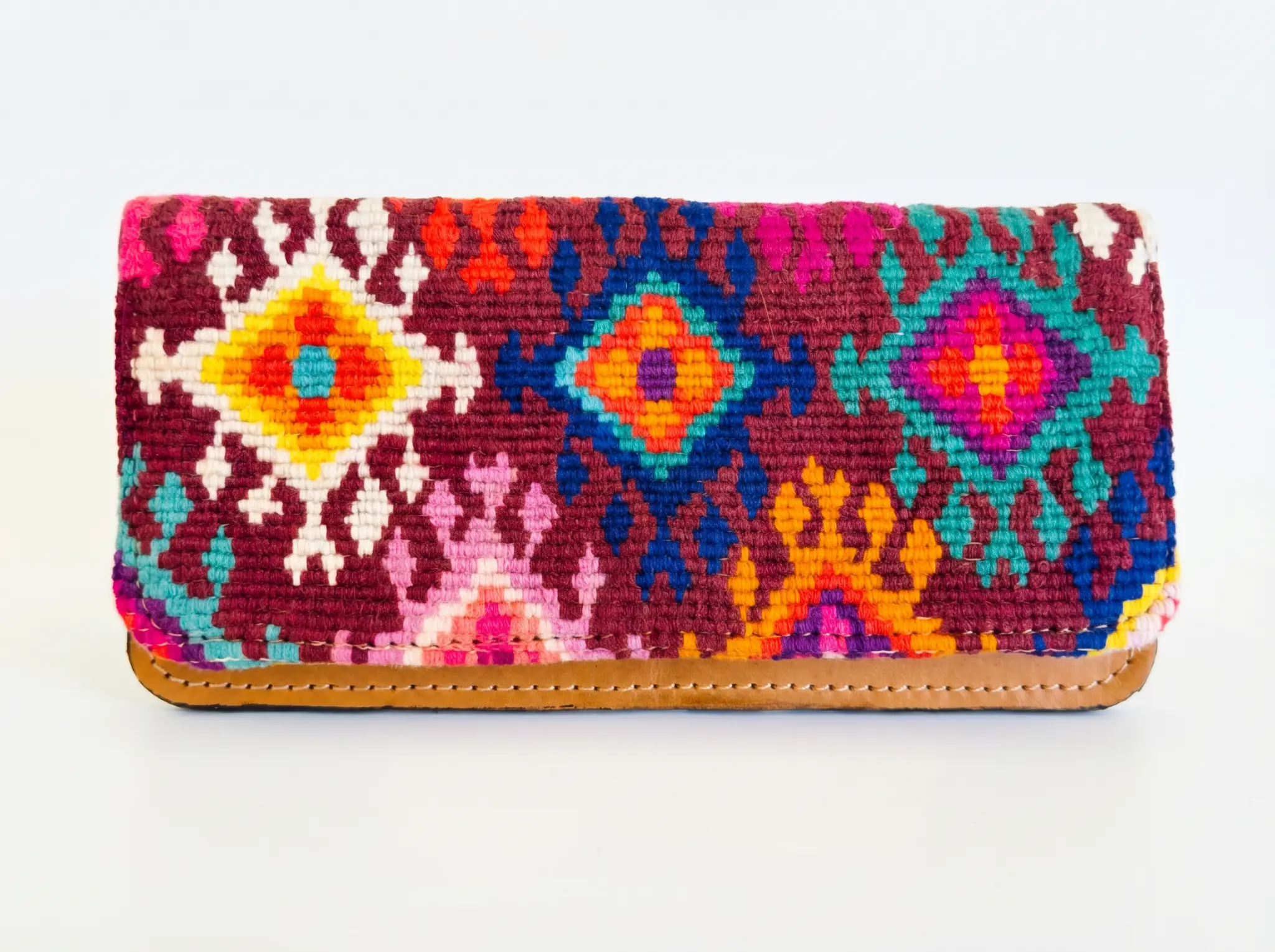
Four Directions — TQC Collection
The four directions are often expressed through diamonds, cross-like forms, four-point motifs, and balanced arrangements. These designs may refer to east, west, north, south, and the center point where the human world is oriented. In some textile interpretations, this structure connects the wearer to the earth, the heavens, the underworld, and the movement of time. The meaning is not always carried by one single shape, but by the way the design is arranged across the cloth.
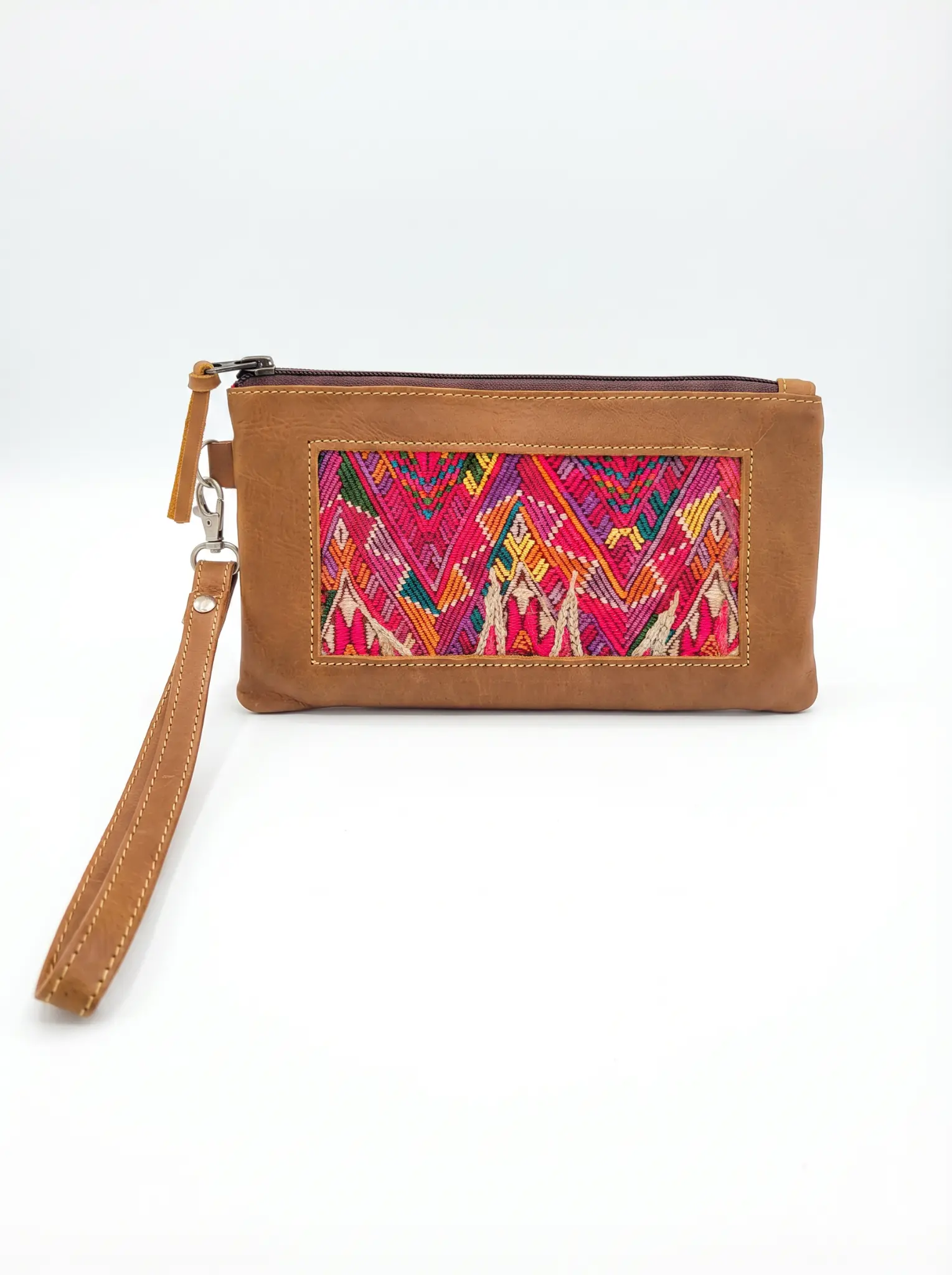
Triangle motif — TQC Collection
Triangles may suggest mountains, volcanoes, peaks, cultivated land, or upward movement. In highland Maya communities, where mountains and volcanoes shape daily life, triangular forms can reflect the physical and sacred landscape. When repeated in a border or band, triangles can create rhythm and direction — almost like a woven memory of the land.
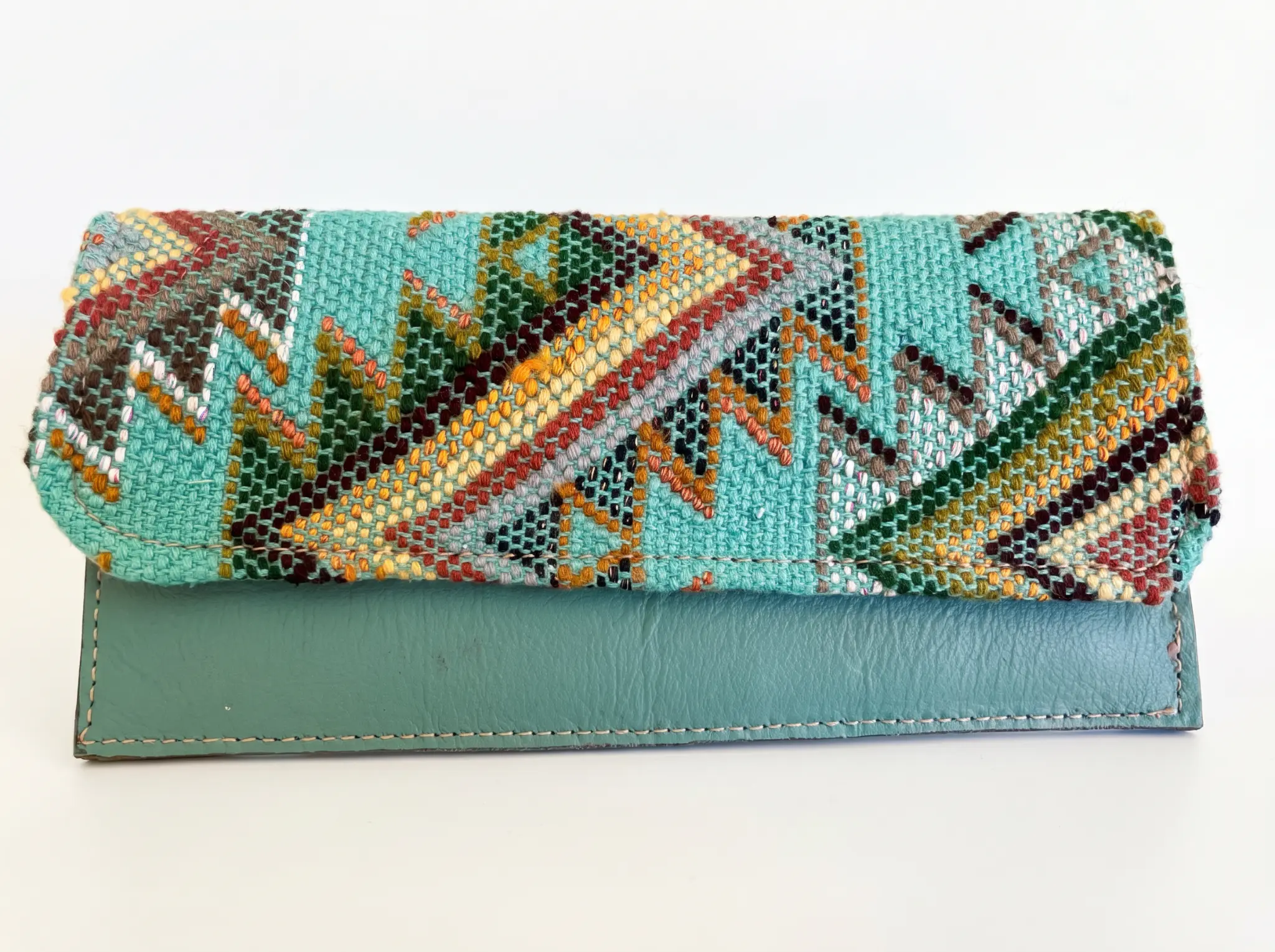
Stepped Forms — TQC Collection
Stepped forms may suggest mountains, agricultural terraces, stairs, sacred architecture, or movement between worlds. Their structure creates a visual climb, moving the eye from one level to the next. In some interpretations, this can reflect transformation, growth, ceremony, or the relationship between earthly and spiritual spaces.
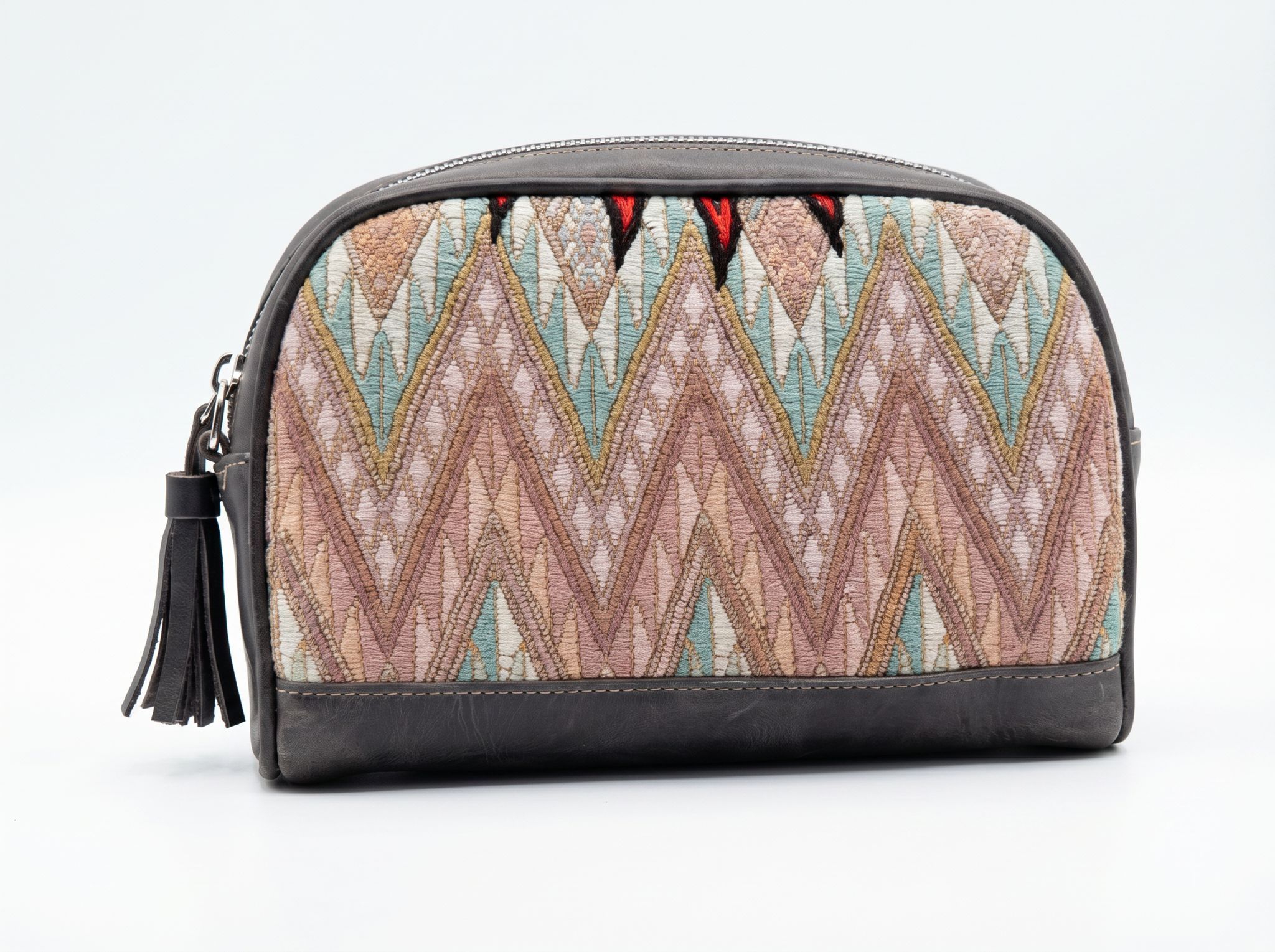
Zigzag motif — TQC Collection
Zigzags are symbols of movement. In some textiles, they may represent mountains or volcanoes. In others, they may suggest roads, rivers, lightning, serpents, or the changing path of life. Their meaning depends heavily on the surrounding motifs and the community where the textile comes from. A zigzag can be landscape, energy, protection, direction, or spiritual movement all at once.
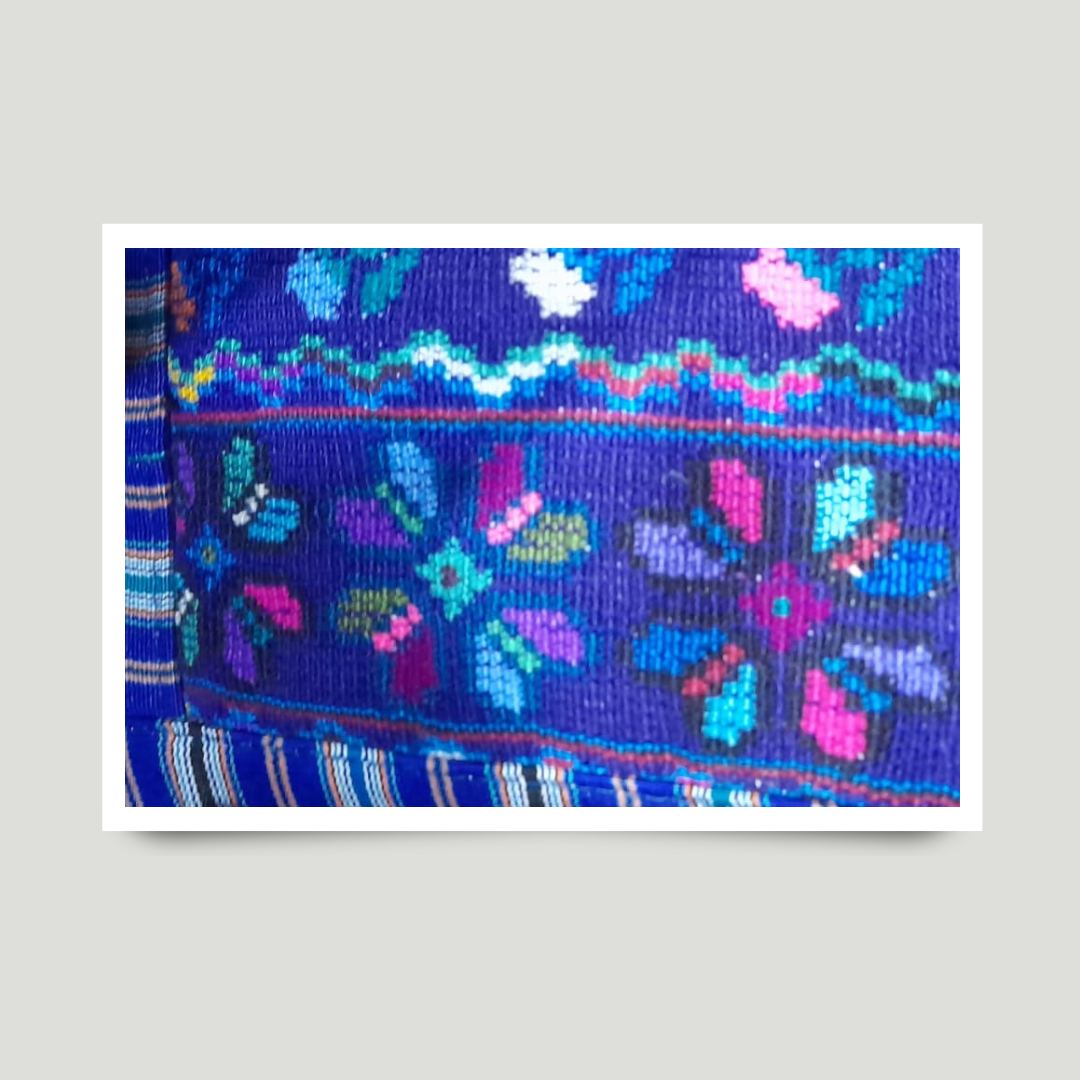
Todos Santos Cuchumatán, Huehuetenango — TQC Collection
Parallel lines and stripes often carry more meaning than they first appear to. They may suggest roads, rivers, rows of crops, rain, boundaries, or the structure of the loom itself. In many Guatemalan Maya textiles, stripes are also part of regional identity. Their color, width, placement, and rhythm can help connect a garment to a specific town or community.
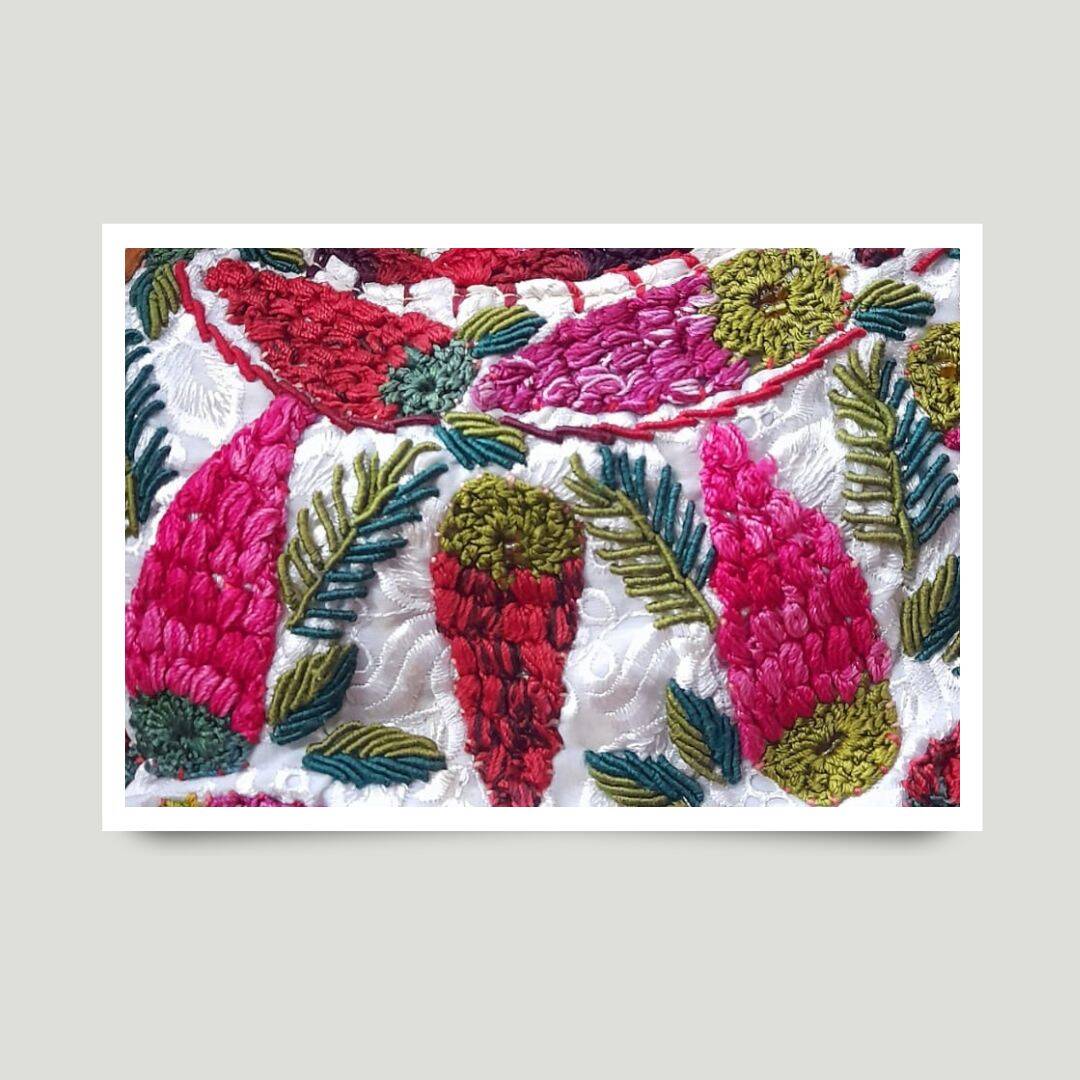
Sacapulas, Quiché — TQC Collection
Bands and borders are not only decorative. They organize the textile and give the design structure. A border may frame the central motifs, separate symbolic sections, or create a protective boundary around the cloth. Repeated motifs within borders can strengthen the rhythm and meaning of the textile, holding the visual story together.
Color Meanings
The Palette of a Living Tradition
Color in Maya textiles can identify place, garment type, age, ceremony, community, and personal taste. Colors interact — their meaning comes from the whole composition, not from any single thread.
Tap any color to learn more about its cultural significance.
Regional Examples
Every Region Speaks Its Own Visual Language
Guatemala's Maya textile tradition is not one tradition — it is dozens of distinct regional traditions, each with its own color systems, motif vocabulary, garment styles, and weaving techniques. Understanding regional differences is one of the most important parts of honoring the textiles we carry.
Santiago Atitlán
Santiago Atitlán textiles are widely recognized for their bird motifs, especially embroidered birds. These birds are not only decorative — they are part of the visual identity of the community. An embroidered bird can help identify a garment from Santiago Atitlán and connect the textile to local identity, natural beauty, and the relationship between earth and sky. In this context, a bird is not simply an animal motif. It may carry regional identity, spiritual movement, and the idea of communication between worlds.
Nebaj / Ixil Triangle
In Nebaj and the Ixil region, textiles are often recognized for dense brocade, strong red grounds, and complex arrangements of figures. Stylized birds, animals, people, and geometric shapes may appear together, creating a rich visual field that feels almost narrative. Here, symbols are not isolated. They work together as a dense language of identity, memory, and community presence.
San Juan Cotzal
In San Juan Cotzal, some documented textile figures carry very specific names and meanings. A family figure may represent father, mother, and child, while another figure is described as the four corners of the earth or the four cardinal points. These examples show why regional knowledge matters. A shape that may look abstract to an outside viewer can carry a name, story, and blessing within the community that uses it.
Cobán / Alta Verapaz
Cobán textiles are known for their fine white cotton ground and delicate white-on-white or subtle color brocade. The aesthetic is quieter and more refined than highland textiles, with a focus on texture and subtlety rather than bold color. Cobán huipiles often have a gauze-like quality that reflects the cooler, misty cloud forest environment of the region.
Sacatepéquez / Antigua Area
The Sacatepéquez region, including communities near Antigua Guatemala, produces textiles with strong geometric structure and a palette that often includes deep greens, purples, and warm earth tones. The proximity to Antigua has historically created both preservation of traditional forms and some evolution toward market-facing styles.
Quetzaltenango / Xela
In parts of Quetzaltenango, textile identity may be expressed through strong color palettes and elaborate motifs of birds, flowers, stars, and animals. These designs show how regional identity is carried not only through one symbol, but through the full composition: color, collar shape, panel structure, embroidery, and motif placement. Communities in this area are known for palettes of reds, yellows, and purples, with elaborate bird, flower, and star motifs in some three-paneled garments.
Chichicastenango
Textiles from Chichicastenango are often recognized for bold visual impact, strong color, and ceremonial presence. Motifs may include geometric forms, floral elements, birds, and radiant shapes. Rather than reading each design as a single symbol, Chichicastenango textiles are better understood through their full visual language: color, scale, repetition, sacred use, and community identity.
Sololá
Sololá sits above Lake Atitlán and has its own distinct textile tradition, separate from the lake communities below. Sololá men's and women's garments are among the most visually striking in Guatemala, with bold color combinations and strong geometric structure. The Sololá market is one of the most important textile trading centers in the highlands.
This is not a complete list. Guatemala has 22 Maya language groups and dozens of distinct textile-producing communities. When in doubt, describe a piece as "Guatemalan Maya textile" rather than guessing at a specific region.
Garment Guide
The Vocabulary of Dress
Each garment in the Maya textile tradition has a name, a purpose, and a place in the visual language of dress. Understanding these terms helps us describe the pieces we carry with accuracy and respect.
Textiles as Living Language
To read a Maya textile is to understand that cloth can carry more than beauty.
It can hold memory, direction, land, family, ceremony, and identity. These symbols are not static decorations. They are part of a living visual language that continues to move through generations of weavers.
Each line, bird, diamond, and border asks us to look closer, to honor the region it comes from, and to remember that the deepest meanings are often held by the communities who continue to weave them.
Today, many women also wear huipiles from communities other than their own as a gesture of kinship, style, identity, or Pan-Maya pride. The relationship between garment and region is meaningful — but not always fixed. Textiles are alive. They travel. They adapt. They carry the past while moving into the future.
Our Heritage Promise
These textiles are not trends.
They are the result of generations of knowledge, women's artistry, cultural memory, and handmade skill. When we incorporate textile elements into modern accessories, our goal is to honor their origin, preserve their beauty, and share their story with care.
We do not claim to be experts in every community's tradition. We are learners, listeners, and advocates for the artisans whose work we carry. We commit to describing pieces accurately, sourcing ethically, and continuing to educate ourselves and our customers.
If you ever have a question about a specific piece — its origin, its motifs, its maker — please reach out. We would rather say "we don't know" than guess incorrectly.
A Note on Our Imagery
Transparency About AI Visuals
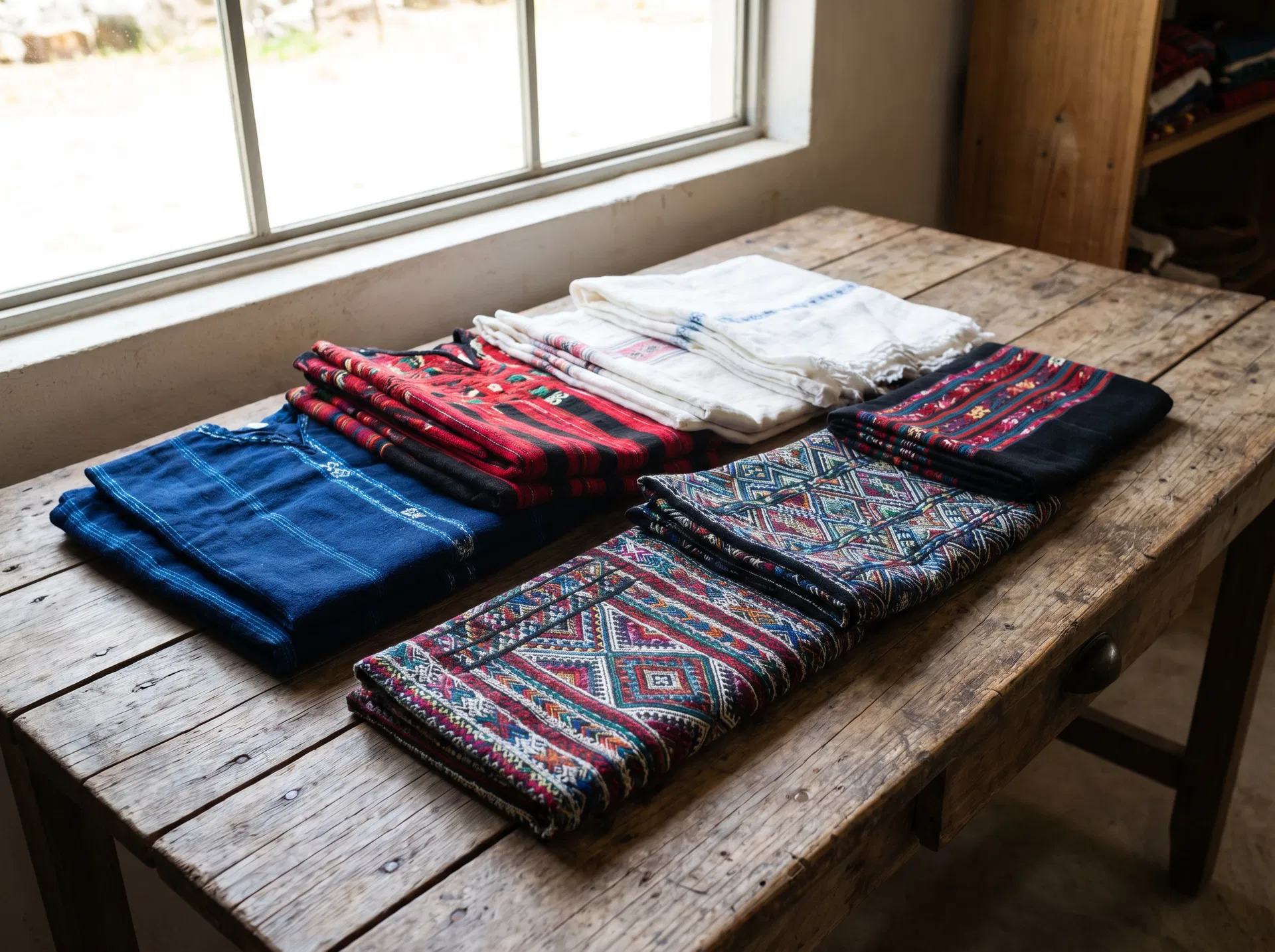
Some of the images on this page were created using AI image generation tools to illustrate textile concepts, colors, and garment types. These images are used for educational and storytelling purposes only.
They are not photographs of specific real textiles, real artisans, or real communities. They are visual approximations created to help communicate the beauty and complexity of Maya textile traditions.
We use AI imagery only where we do not have access to authentic photographs, and we are committed to replacing these images with real documentation as our collection and relationships with artisan communities grow.
Research Sources