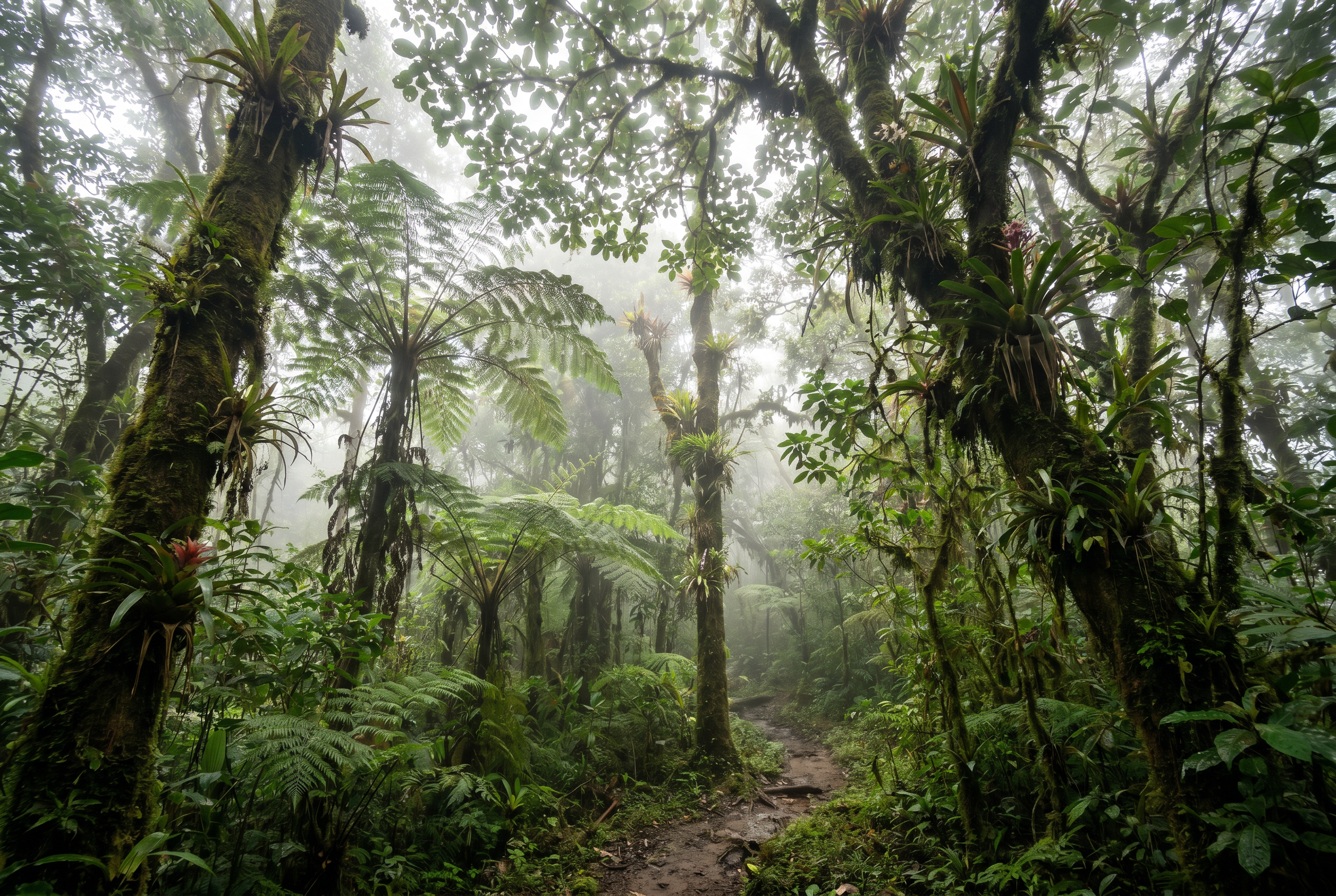
The Biotopo del Quetzal is a protected cloud forest reserve in Baja Verapaz dedicated to the preservation of the resplendent quetzal, Guatemala's national bird and one of the most visually striking birds in the world. The reserve offers hiking trails through dense cloud forest and the possibility of spotting quetzals in their natural habitat — particularly during nesting season from February to June.
The resplendent quetzal (Pharomachrus mocinno) is a bird of extraordinary beauty. The male's iridescent green plumage, crimson breast, and tail feathers that can reach 65 centimeters in length made it one of the most sacred animals in pre-Columbian Mesoamerica. For the ancient Maya, the quetzal's feathers were more valuable than gold — they were used in the headdresses of rulers and in ceremonial regalia that signified the highest levels of political and spiritual authority. The bird's name in Nahuatl means 'precious' or 'beautiful.'
The Biotopo Mario Dary Rivera, to give the reserve its full name, was established in 1976 and covers approximately 1,044 hectares of cloud forest along the Sierra de las Minas mountain range. The reserve protects not just the quetzal but the entire cloud forest ecosystem on which it depends — the avocado trees whose fruit feeds the bird, the bromeliads and orchids that cover every surface, and the cool, mist-laden air that gives the forest its particular quality of light.
The reserve has two hiking trails. The shorter Musgos trail (1.8 km) passes through the densest part of the cloud forest and offers the best chance of quetzal sightings. The longer Los Helechos trail (3.8 km) covers more of the reserve and passes through several distinct forest zones. Both trails are well-maintained and can be walked without a guide, though a local guide significantly increases the chances of spotting quetzals and other wildlife.
The best time to visit is during nesting season, from February to June, when the males are most active and their tail feathers are fully grown. Early morning — arriving at the reserve before 7am — offers the best conditions for sightings, as the birds are most active in the first hours after dawn. Even without a quetzal sighting, the cloud forest itself is worth the visit: the density of the vegetation, the variety of epiphytes, and the quality of the silence make it one of the most immersive natural environments in Guatemala.
Heritage & Cultural Context
The Deeper Story
The quetzal holds a place in Maya and Aztec cosmology that is difficult to overstate. Quetzalcóatl, the feathered serpent deity central to Mesoamerican religion, takes his name from the bird. In Maya tradition, the quetzal was associated with the sky, with freedom, and with the divine — a bird that could not survive in captivity and therefore symbolized the impossibility of enslaving a free people. Guatemala's national currency, the quetzal, and the country's national bird both take their name from this tradition.
A Note from The Quetzal Collective
The Quetzal Collective takes its name from this bird — and from what it represents. The quetzal's association with freedom, beauty, and the impossibility of captivity is the spirit behind every piece we carry. Visiting the Biotopo and seeing the bird in its natural habitat is, for us, the most direct expression of what the collective is about.