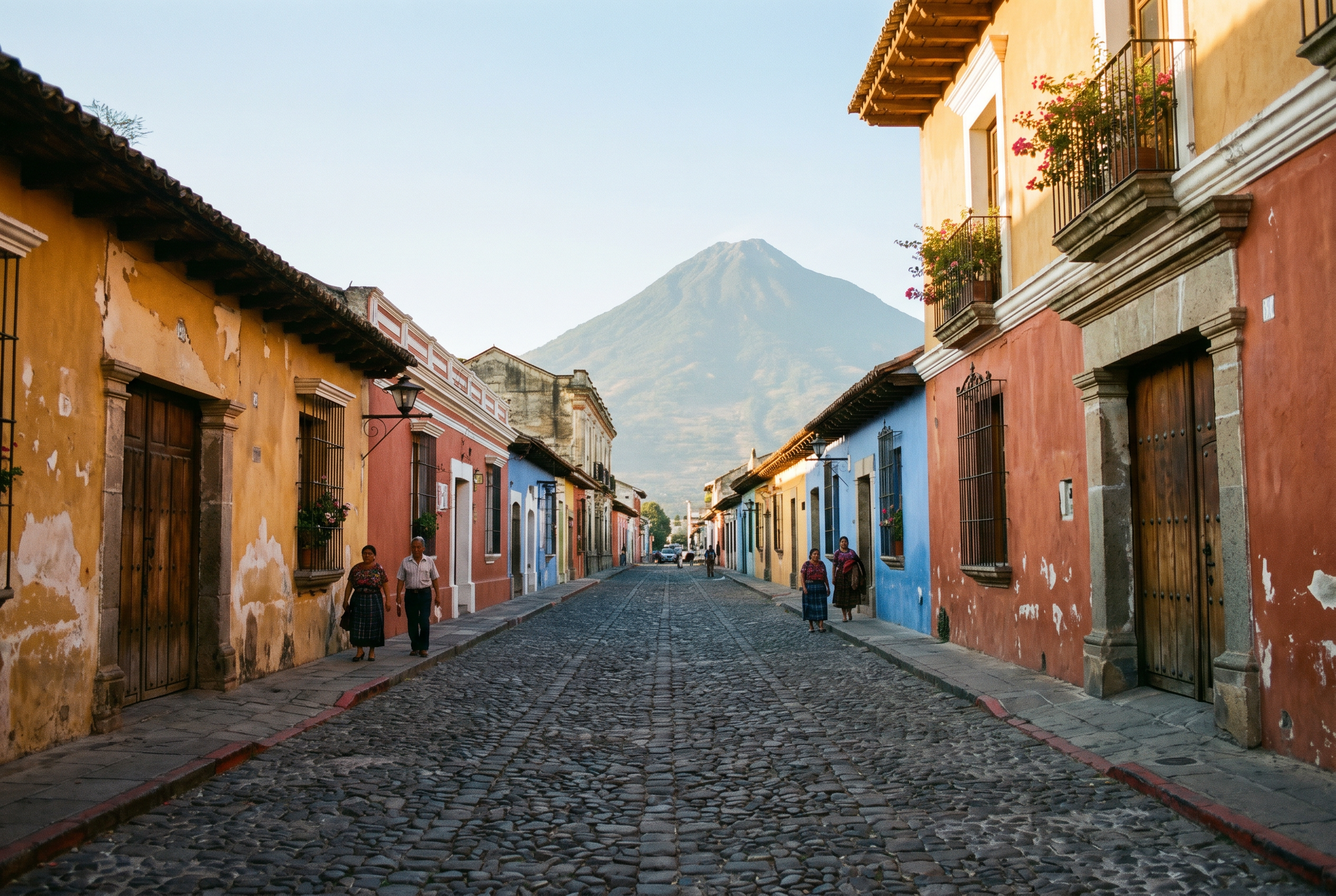
Antigua is one of the best-preserved Spanish colonial cities in the Americas and a UNESCO World Heritage Site. Its cobblestone streets, ochre-colored ruins, and backdrop of three volcanoes — Agua, Fuego, and Acatenango — create an atmosphere that is unlike anywhere else in Central America. For travelers interested in history, architecture, textiles, and culture, Antigua is not optional. It is essential.
The city was founded in 1543 as the capital of the Captaincy General of Guatemala, one of the most important administrative centers in colonial Spanish America. At its height, Antigua was home to universities, convents, churches, and civic buildings that rivaled anything in the New World. A series of devastating earthquakes in 1773 led to the official abandonment of the capital, but the city was never fully demolished. The ruins of convents, churches, and civic buildings were left standing, giving Antigua a remarkable layered quality where colonial grandeur and natural force coexist in the same streetscape.
The Central Park is the heart of the city and the best starting point for any visit. The Fuente de las Sirenas fountain, the Palace of the Captains General, and the Cathedral of Santiago anchor the square and frame a view that has changed little in centuries. Walking north from the park, the ruins of La Merced Church and the Convent of Las Capuchinas offer some of the most evocative colonial spaces in Guatemala — roofless halls, crumbling arches, and gardens where bougainvillea grows through the stones.
Antigua is also one of the most important centers for Maya textile trade in Guatemala. The market near the bus terminal and the smaller artisan markets throughout the city offer handwoven huipiles, table runners, bags, and accessories from communities across the highlands. The quality ranges widely, and knowing what to look for — the weight of the fabric, the tightness of the weave, the consistency of the natural dyes — makes the difference between a souvenir and a genuine piece of cultural heritage.
The coffee culture of Antigua is worth its own attention. The volcanic soil of the surrounding valley produces some of the most celebrated coffee in the world, and the city's cafés and roasteries offer tastings, tours, and direct connections to the farms that grow it. Combining a morning at the ruins with an afternoon at a coffee farm is one of the most satisfying ways to spend a day in Antigua.
Heritage & Cultural Context
The Deeper Story
The Semana Santa (Holy Week) processions in Antigua are among the most elaborate and visually stunning religious celebrations in the world. Alfombras — intricate carpets made from colored sawdust, flowers, pine needles, and fruits — are laid in the streets for the processions to walk over, and the combination of colonial architecture, incense, and candlelight creates an experience that draws visitors from across the globe. The processions blend Catholic ritual with Maya spiritual practice in a way that is uniquely Guatemalan and deeply moving.
A Note from The Quetzal Collective
The textile markets of Antigua are where many of the highland weaving traditions converge in one place. Pieces from Chichicastenango, San Juan La Laguna, and the Ixil Triangle all find their way here. The Quetzal Collective works directly with artisan communities rather than market intermediaries — but Antigua's markets offer a useful introduction to the range and variety of Guatemalan textile tradition.