
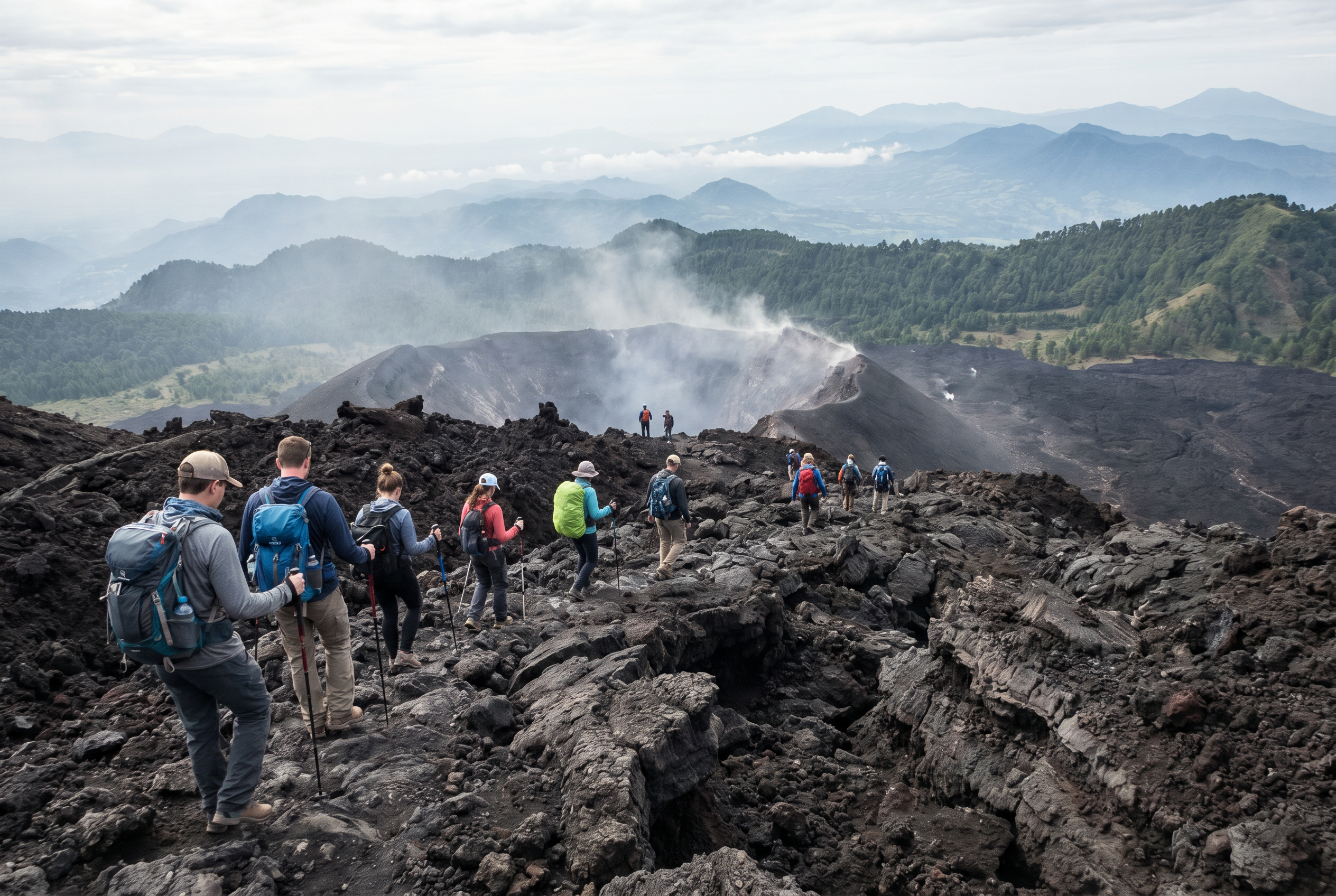
Pacaya Volcano offers travelers a more adventurous side of Guatemala and is especially appealing for guests who want movement, scenery, and an active outdoor experience close to Antigua. The hike introduces visitors to volcanic terrain, panoramic views, and the excitement of walking on a landscape shaped by geological forces — including the famous experience of cooking food on the still-warm lava.
Pacaya is one of the most active volcanoes in Central America, with near-continuous eruptive activity since 1961. The volcano sits within the Pacific volcanic chain that runs along the southern edge of Guatemala, and its activity is a visible expression of the tectonic forces that have shaped the country's geography for millions of years. The same volcanic activity that makes Pacaya dramatic also makes the surrounding soil extraordinarily fertile — the agricultural productivity of the Pacific lowlands is directly connected to the volcanic geology that Pacaya represents.
The hike to the summit area takes approximately two to three hours from the trailhead, passing through pine forest in the lower sections before emerging onto the open volcanic landscape of the upper slopes. The terrain changes dramatically as you gain elevation — from forest to scrub to bare lava fields where nothing grows and the ground underfoot is dark, rough, and still warm in places. The views from the upper slopes extend across the Pacific lowlands to the coast and, on clear days, to the volcanoes of El Salvador.
The most memorable experience at Pacaya is the lava cooking — using the residual heat of the volcanic rock to cook marshmallows, corn, or other food directly on the ground. Local guides carry the supplies and know the spots where the heat is sufficient, and the combination of the dramatic landscape and the absurdly domestic activity of cooking on a volcano creates a moment that stays with travelers long after they leave Guatemala.
Pacaya is accessible as a day trip from Antigua, approximately 90 minutes away, and is one of the most popular excursions from the colonial city. The combination of the hike, the views, and the lava cooking makes it a complete experience that appeals to a wide range of travelers — from families with older children to serious hikers looking for a more demanding ascent to the active crater area.
Heritage & Cultural Context
The Deeper Story
Volcanoes have shaped Guatemala's cultural identity as profoundly as they have shaped its geography. The Maya associated volcanoes with the underworld, with creation, and with the cyclical forces that governed the cosmos. The eruption of Ilopango volcano around 536 CE — one of the largest volcanic events in the last two millennia — may have contributed to the disruption of early Classic Maya civilization in the highlands. The volcanic landscape of Guatemala is not just a backdrop to its culture; it is one of the forces that has shaped that culture over thousands of years.
A Note from The Quetzal Collective
The volcanic landscape of Guatemala is the geological foundation of everything that grows here — the coffee, the corn, the flowers, the forests. The same forces that make Pacaya dramatic make the soil of the highlands fertile enough to sustain the agricultural communities that produce the textiles and crafts The Quetzal Collective carries. The volcano is not separate from the culture; it is part of its foundation.