
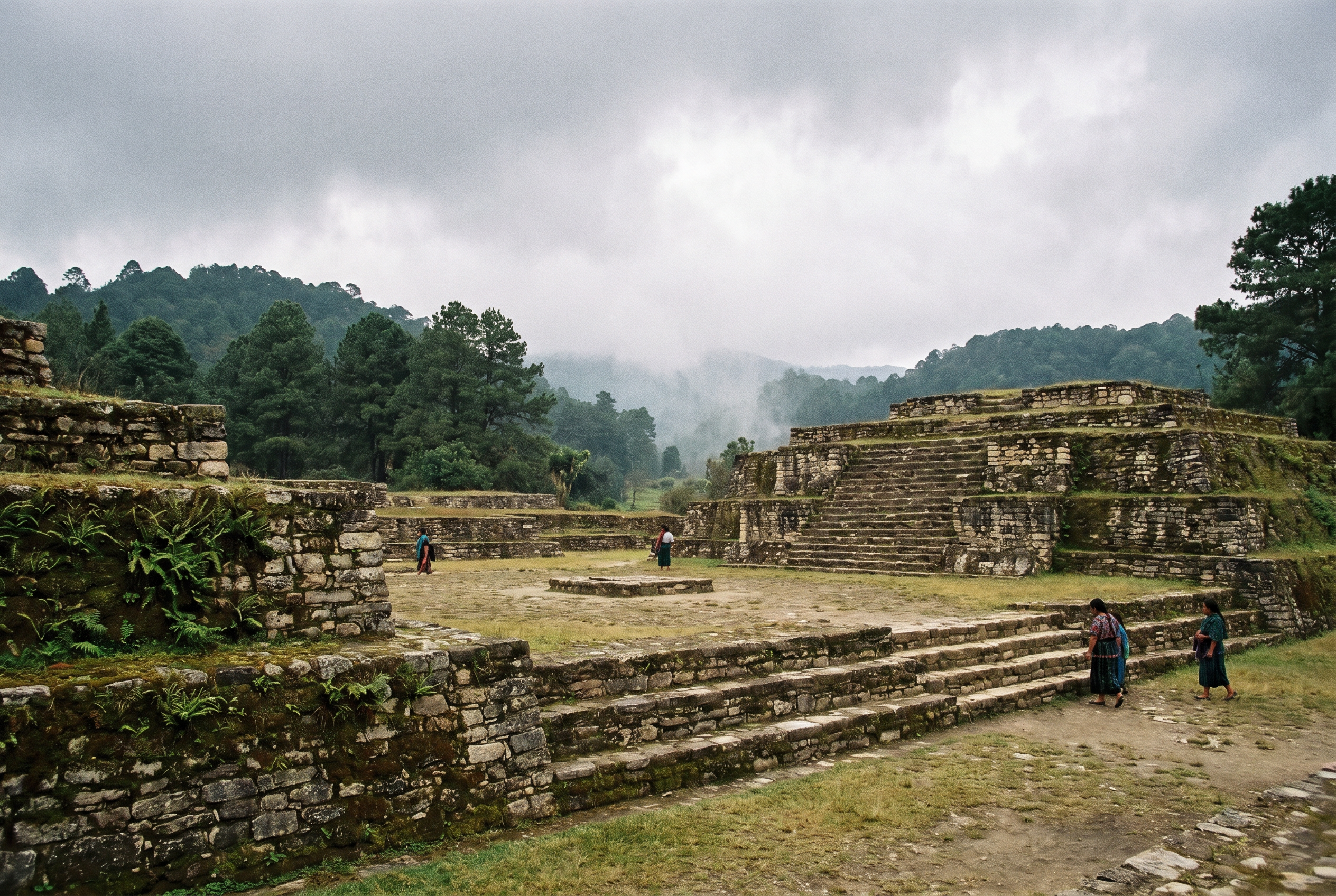
Iximché was the capital of the Kaqchikel Maya kingdom and one of the most important political centers in the highlands at the time of the Spanish arrival. Today its plazas, temples, and ball courts remain in a remarkable state of preservation, set within a pine forest that gives the site a serene and contemplative atmosphere. It is one of Guatemala's most significant and undervisited archaeological sites.
Founded around 1470 on a defensible plateau surrounded by ravines, Iximché was designed as much for security as for ceremony. The Kaqchikel had recently broken from the K'iche' Maya of Utatlán and needed a capital that could be defended against their former allies. The site's natural topography — a mesa with steep drops on three sides — made it nearly impregnable, and the city grew rapidly into a major political and ceremonial center.
The Spanish conquistador Pedro de Alvarado arrived at Iximché in 1524, and the Kaqchikel initially allied with him against their K'iche' enemies. The Spanish briefly established their first capital of Guatemala here, calling it Santiago de los Caballeros. The alliance broke down within two years when the Spanish demanded tribute the Kaqchikel could not provide, and the city was abandoned. The Kaqchikel dispersed into the surrounding highlands and conducted a guerrilla resistance against the Spanish for years afterward.
Today the site consists of four main plazas, several temple platforms, two ball courts, and the foundations of elite residential structures. The preservation is excellent — the stone platforms are largely intact, and the spatial relationships between the different ceremonial areas are clear. The pine forest that surrounds the site adds to the atmosphere, filtering the light and creating a quiet that makes it easy to imagine the city as it once was.
Iximché remains an active ceremonial site. Maya spiritual leaders (ajq'ijab') perform traditional ceremonies here regularly, particularly around important dates in the Maya calendar. Visitors may encounter these ceremonies in progress — they should be observed quietly and respectfully, from a distance, without photography unless explicitly invited.
Heritage & Cultural Context
The Deeper Story
In 2007, Maya leaders from across Guatemala gathered at Iximché to perform a purification ceremony after a visit by U.S. President George W. Bush, symbolically cleansing the sacred ground after what they considered a desecration. The event drew international attention and highlighted the continuing spiritual and political significance of the site for contemporary Maya communities. Iximché is not a ruin — it is a living ceremonial space that happens to be ancient.
A Note from The Quetzal Collective
The Kaqchikel Maya of the Chimaltenango region are among the most active weavers in Guatemala today, and the textile traditions of communities like San Juan Comalapa and Patzún are directly descended from the cultural life that centered on Iximché. Visiting the site connects the living craft traditions to their historical and political roots.